
Local SEO for Cheyenne Small Businesses: How to Rank Higher in Google Maps
If you want more local traffic, stronger Google Maps visibility, and better lead generation, this guide explains how local SEO helps small businesses in Cheyenne, Wyoming stand out in search.
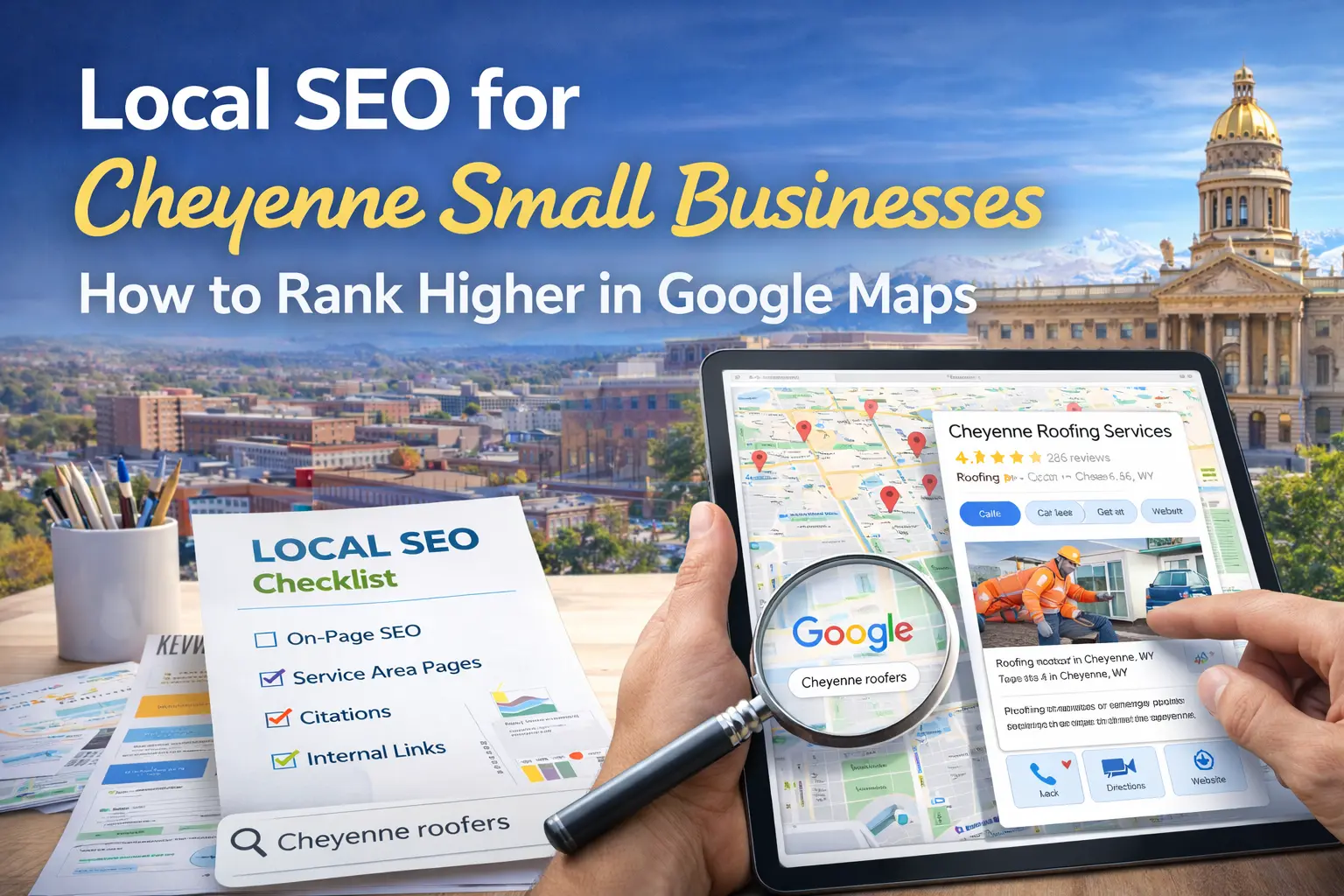
Local SEO helps small businesses become easier to find
Better Google Maps rankings often come from stronger profile optimization, better website relevance, consistent business details, and useful local content.
Local SEO for Cheyenne small businesses is one of the most effective ways to improve visibility in Google Search and Google Maps. If customers in Cheyenne, Wyoming cannot find your business easily, you may be losing calls, leads, and sales to competitors with better local presence.
Many small businesses invest in a website but do not fully connect it with their Google Business Profile, service pages, location relevance, review strategy, and on-page SEO. As a result, their business stays harder to find in local search even if the service quality is strong.
In this guide, you will learn practical local SEO steps that can help small businesses in Cheyenne, WY rank higher in Google Maps, improve search visibility, and attract more local customers with stronger trust and better online positioning.
What Is Local SEO and Why It Matters
Local SEO helps your business appear in search results when people nearby look for your products or services. This includes searches with local intent such as “near me,” “in Cheyenne,” or service-based searches that trigger Google Maps results.
For small businesses, local SEO matters because customers often make fast decisions from what they see in Google first. If your business profile, website, reviews, and local signals are stronger than others, you are more likely to receive the click or the call.
- Improves visibility in Google Maps and local search
- Helps local customers discover your business faster
- Builds trust through reviews and accurate business details
- Supports calls, website visits, and direction requests
- Connects your website with local search intent
- Helps small businesses compete more effectively in Cheyenne
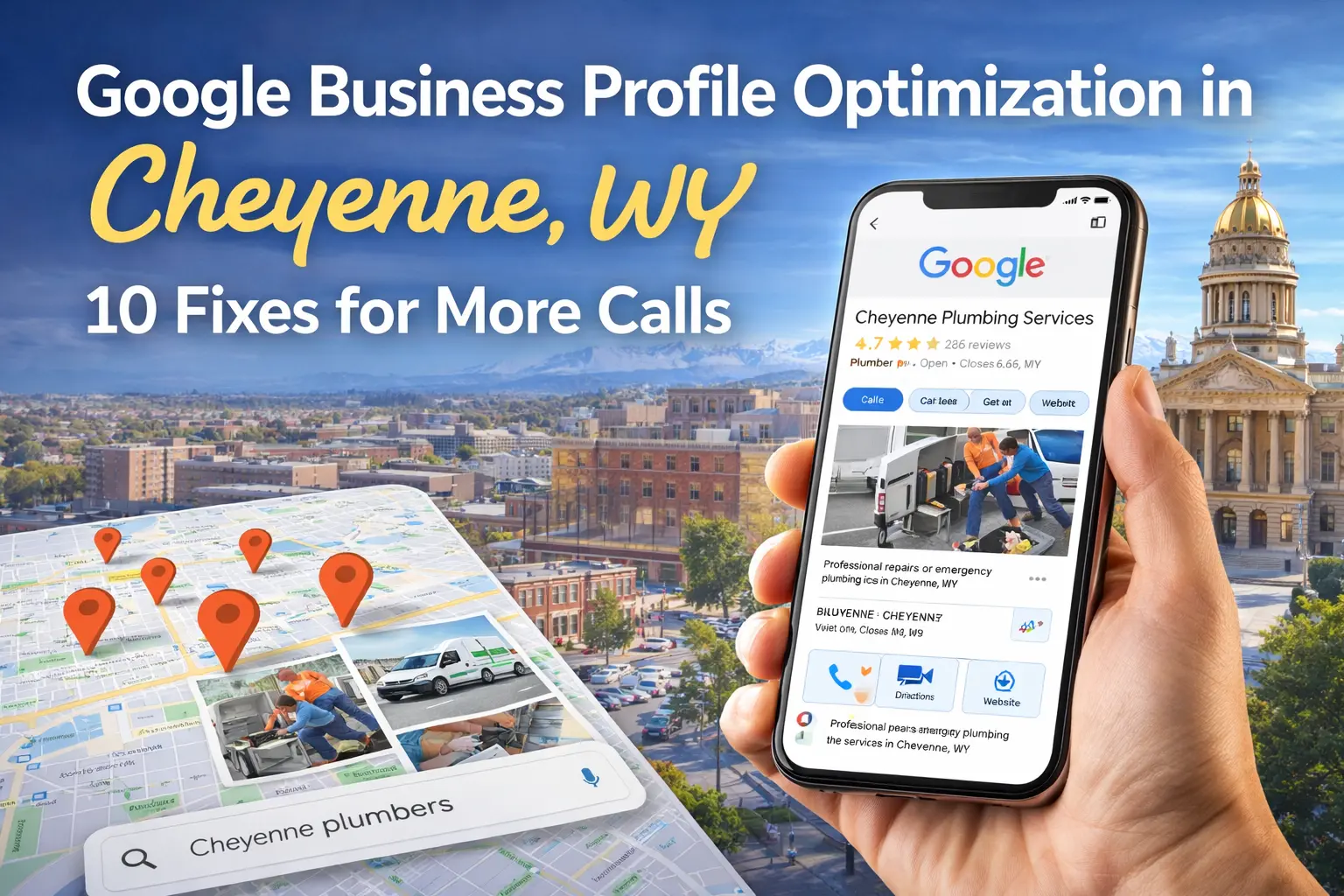
Google Business Profile Is the First Priority
If you want to rank higher in Google Maps, your Google Business Profile should be a major focus. It is often the first local asset Google uses to decide whether your business is relevant, trustworthy, and active enough to show for nearby searches.
Your profile should include the correct category, accurate business information, high-quality photos, service details, operating hours, and reviews. It should also be connected to a strong website with clear local relevance.
If your profile needs improvement, strengthen it alongside your wider SEO services and website design and development strategy so both assets support each other.
Make Your Website Support Local Search
A strong website plays a major role in local SEO. Your site helps Google understand your services, your target location, and how helpful your content is for local visitors. It also helps convert visitors into leads after they click from Maps or search results.
Your website should clearly explain what you do, where you work, and why customers should trust you. That means strong page titles, helpful service content, local language where relevant, mobile-friendly layout, clear contact information, and visible calls to action.
Important local SEO principle
A Google Business Profile can help you get discovered, but your website often helps you win the customer. Both should work together for better local results.
Use Location-Relevant Service Pages
One of the biggest local SEO mistakes is relying only on a homepage. Small businesses usually need well-written service pages that describe what they offer in a clear and helpful way. These pages support relevance, internal linking, and conversion performance.
For example, businesses can strengthen topical authority by connecting helpful content with relevant core pages like services, website design and development, SEO services, social media marketing, and ecommerce website solutions.
Optimize for Mobile Speed and Usability
Many local searches happen on mobile devices. If your website is slow, hard to read, or difficult to use on a phone, users may leave before contacting you. That hurts both conversion potential and user trust.
Mobile-friendly design improves readability, navigation, speed perception, and ease of contact. It is especially important for businesses that depend on calls, booking requests, or quick local inquiries.
Earn More Local Reviews
Reviews help customers trust your business faster, and they can also support stronger local visibility over time. Businesses with recent, relevant, and authentic reviews often look more credible than profiles with little recent activity.
Ask satisfied customers to leave honest reviews, and respond professionally to feedback. Reviews that mention your service quality, responsiveness, and location can be especially useful for building local trust.
Simple review strategy basics
- Ask real customers for reviews after successful work
- Reply to positive and negative reviews professionally
- Keep review growth consistent instead of random
- Use reviews as trust signals across your website
- Avoid fake or low-quality review shortcuts
Publish Local Content That Answers Real Questions
Helpful content can strengthen local SEO when it matches real customer intent. Blog articles, FAQs, service guides, and educational content help your website become more useful and more relevant around the topics your audience searches for.
Content works best when it supports real search intent instead of just repeating keywords. Topics around local visibility, Google Maps, website performance, business branding, and digital marketing can strengthen your authority when connected properly through internal linking.
This is one reason blogs should support related pages like branding and graphic design, email marketing automation, and portfolio.
Keep Business Details Consistent Everywhere
Your business name, phone number, website, and address or service-area details should stay consistent wherever your business appears online. Inconsistencies can confuse users and weaken trust signals.
Your core business information should match across your website, Google Business Profile, contact pages, and any relevant local listings. Consistency supports professionalism and makes your business easier to verify.
Build Strong Internal Linking
Internal linking helps Google and users move through your website logically. It shows how your pages relate to each other and strengthens the importance of your most valuable pages.
For local SEO, your blog posts should connect naturally to important conversion pages like pricing, website package, SEO package, ecommerce package, and your contact page.
Common Local SEO Mistakes Small Businesses Make
Many local businesses do some SEO work but still miss the bigger picture. A few common problems can hold rankings back even when the business itself is strong.
- Ignoring Google Business Profile: An incomplete or inactive profile weakens local visibility.
- Weak service pages: Thin content rarely supports strong rankings or trust.
- No location relevance: Generic content often struggles in local search.
- Poor mobile experience: Mobile usability directly affects local conversions.
- No review strategy: Reviews are a major trust signal for local businesses.
- Weak internal linking: Important pages need support from related content.
How to Compete Better in Google Maps
Ranking higher in Google Maps usually comes from doing many practical things well rather than looking for one shortcut. Strong categories, reviews, accurate information, service relevance, helpful website content, and consistent activity all contribute to better local positioning.
Businesses that improve these areas consistently often build better local trust and stronger visibility over time. For small businesses in Cheyenne, that can mean more qualified calls, more direction requests, and more opportunities to win local customers.
Final Thoughts: Local SEO Creates Real Growth Opportunities
Local SEO is not only about rankings. It is about making your business easier to find, easier to trust, and easier to contact. For Cheyenne small businesses, that can create a real difference in lead generation and long-term growth.
A strong local SEO strategy connects your Google Business Profile, website structure, service pages, reviews, local content, and internal linking into one clear system. When these pieces support each other, your business becomes more competitive in Google Maps and local search.
If your business has a quality service but weak online visibility, improving local SEO can help close that gap. Better local presence often starts with practical updates, consistent optimization, and a stronger website foundation.
Need help improving local SEO for your business in Cheyenne?
Pak Web Expert helps businesses improve local SEO, Google Business Profile performance, service-page structure, website usability, and conversion-focused visibility for stronger local growth.
Frequently Asked Questions
Local SEO helps Cheyenne small businesses appear more often in Google Maps and local search results by improving Google Business Profile, website content, service pages, reviews, and location relevance.
Rank higher in Google Maps by optimizing your Google Business Profile, keeping business details accurate, earning reviews, improving website relevance, and publishing useful local content.
Yes. Your website affects local SEO through page structure, service relevance, internal links, mobile usability, speed, contact clarity, and trust-building content.
Reviews build trust, improve profile quality, influence customer decisions, and can support stronger local search visibility over time.